Your guide to one of the prettiest (and greenest) treks in all of Gilgit-Baltistan, the Pakora Pass Trek from Naltar to Ishkoman Valley. Also known as Naltar Pass.
When it comes to trekking in Pakistan, I’m a firm believer in one thing: there’s no need to share the trail with anyone but shepherds. Pakistan is home to not one but three of the world’s tallest mountain ranges—why limit yourself to routes where every other tourist is going?
While everyone else flocks to the route to K2 Basecamp and Patundas Glacier, I dream of another route: a grand route connecting Naltar Valley, Ishkoman Valley, Yasin Valley, and Broghil, eventually leading down into the Mastuj region. Remote trails connecting some of the most peaceful and hospitable regions of northern Pakistan, with hardly a soul in sight save for a few shepherds.
Recently, I finally took the first steps toward my dream: I completed the Pakora Pass trek from Naltar to Ishkoman Valley. It took three days and two nights to reach my home base at Coyote Den Ishkoman, and the trek was undeniably stunning. Think meadows lush with wildflowers, snowy virgin peaks, and thick juniper forests untouched by humans. And, of course, 0 tourists.
If you want to do the same—which I highly recommend you do—read on for a guide to the Pakora Pass trek from Naltar to Ishkoman Valley.
Table of Contents
- Quick trek details
- Guides, budget, and prices
- Day 1: Naltar to Shani
- Day 2: Over Pakora Pass
- Day 3: Down Pakora Nala
- Best place to stay in Ishkoman Valley
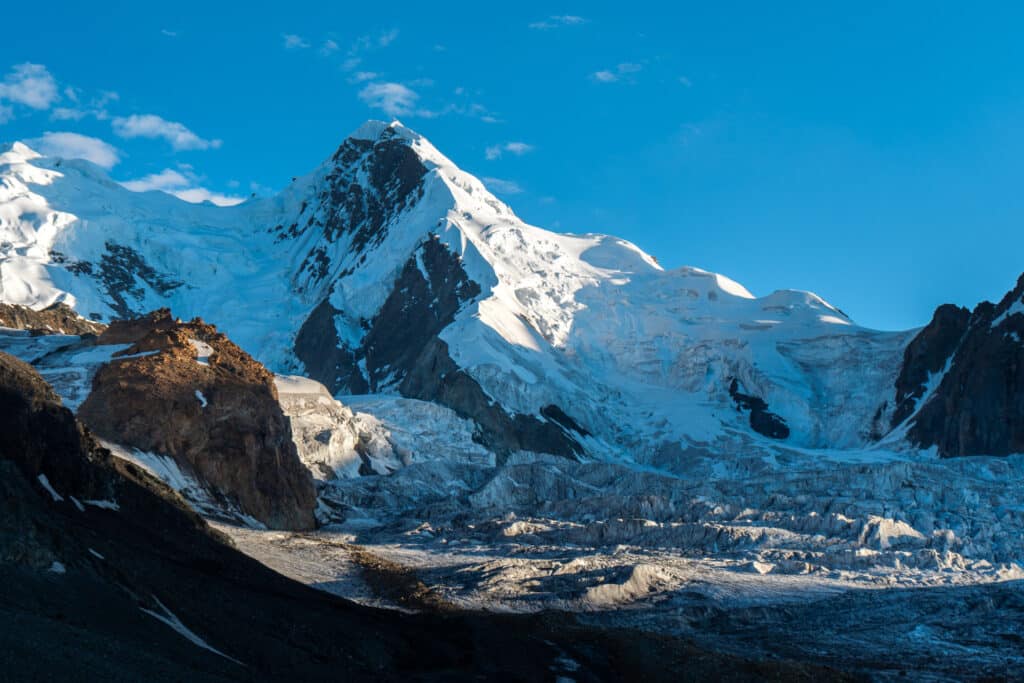
One of many glaciers visible on the way over Pakora Pass
Quick Trek Details
- Distance: ~45 kilometers from Satrangi Lake, Naltar to the main road in Pakora village
- Starting point: Satrangi Lake, Naltar Valley
- Ending point: Pakora village, Ishkoman Valley
- Highest point: 4,700m (Pakora Pass)
- Lowest point: 2,000m (Pakora village)
- Number of days: Ideally 3-4 days, doable in 2d/1n if you’re very fast
- Glacier crossing: Yes
- Technical skills required: No
- Difficulty: Average
- Water along the way: Yes, springs and rivers both
- Best time: July to September
Trekking route is visible on Open Street Maps. I used OSMand to navigate with offline maps.
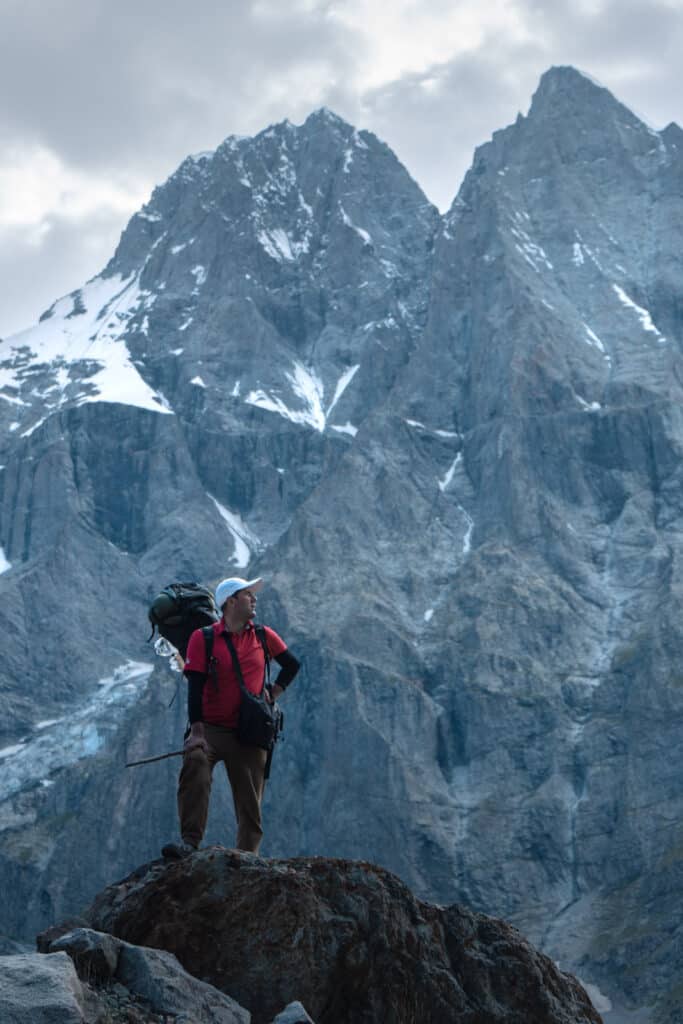
Hakim, my go-to trekking guide for any treks in Gilgit-Baltistan. He’s a local from Ishkoman Valley.
Guides, Budget, and Prices
The Pakora Pass trek from Naltar to Ishkoman Valley can be done within a variety of budgets. Of course, don’t forget that you always get what you pay for.
Trekking guides
It’s possible to do this trek independently as long as you’re comfortable crossing a glacier on your own. However, in remote places like Pakistan, it’s useful to have a guide with you just in case you lose the way, something happens, or to break the ice with any locals coming to say salaam en route.
A good trekking guide—someone who speaks good English, knows the routes, and can handle the logistics the entire trek—costs at least 12,000 PKR per day (as of August 2026). If you want a smooth experience, I highly recommend contacting Hakim, a local guide from Ishkoman who can help organize your trek. He’s available on WhatsApp at +923485212803 and Instagram at @ishkomanguide.
If you’re on a tight budget, there are shepherds roaming around that often offer their services as guides to passersby. I’d expect to pay them at least 3-5,000 per day, but don’t expect any English, or much beyond their pointing you in the right direction every once in a while. If you go in summer, in the green pastures you’ll likely run into people who can point you in the right direction anyway.
Other trek costs/service prices
Beyond food supplies and a guide if desired, costs are minimal. Here are a few other costs/prices to keep in mind depending on how you want to trek:
- Transport from Zero Point to the trek starting point: 9000 for a Jeep, 10000 for a Prado (1 hour drive saves you a day of hiking)
- Room in Naltar: 4000 at Naltar Continental Hotel
- Porters: 3500 day to carry a 25kg load, price includes their food
- Donkey: 5-15000 depending on the animal’s condition and owner, healthy donkeys can carry up to 50kg
Note that porters and donkeys must also return after the trek is done, and you have to pay for the return days as well. Plan for them to return in about half the time it takes you to trek—they’re speedy!
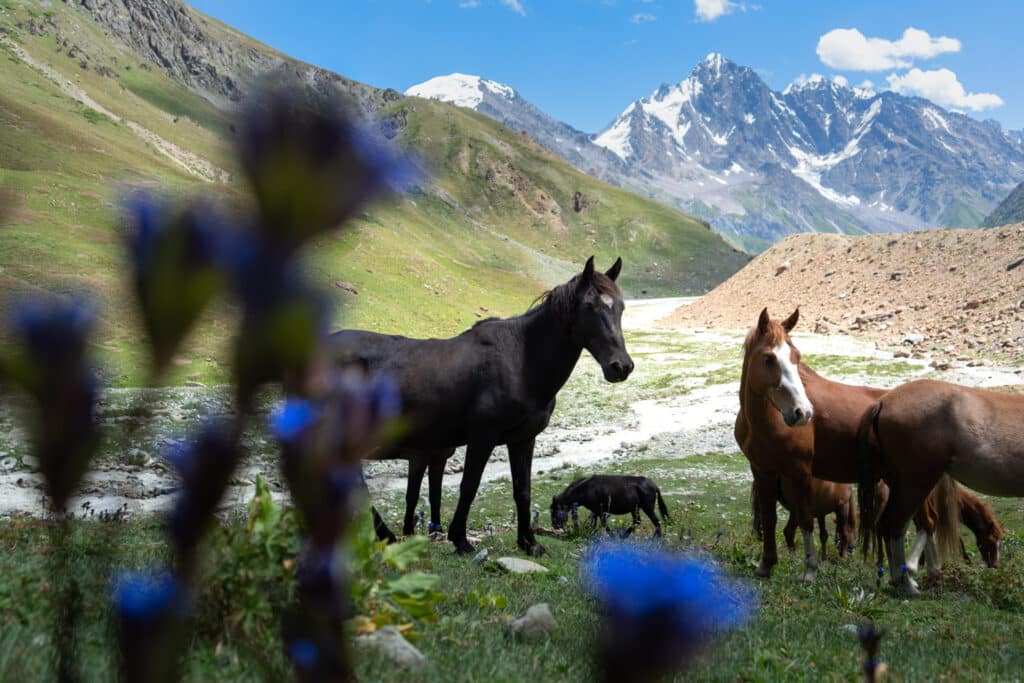
Curious ponies on the way up the pass
Itinerary: Pakora Pass Trek from Naltar to Ishkoman Valley
Day 1: Naltar to Lower Shani (10-12km)
The first day of the trek starts with a jeep ride, unless you prefer to walk from Naltar’s zero point to the lake area (a full day of hiking). As Naltar is a popular tourist destination with Pakistani tourists, there’s a good chance you can catch a ride with someone if you wait for a while. We were impatient, and so we paid a jeep driver to drop us off at 6AM.
The trek starts from the back side of Satrangi Lake (7 Colored Lake), soon crossing over a little bridge before continuing along the mountainside with the river on your left. Day 1’s route is beautiful: lush green meadows, lots of shepherds bringing their flocks up and down to higher pastures, locals poking around huts in the high hills.
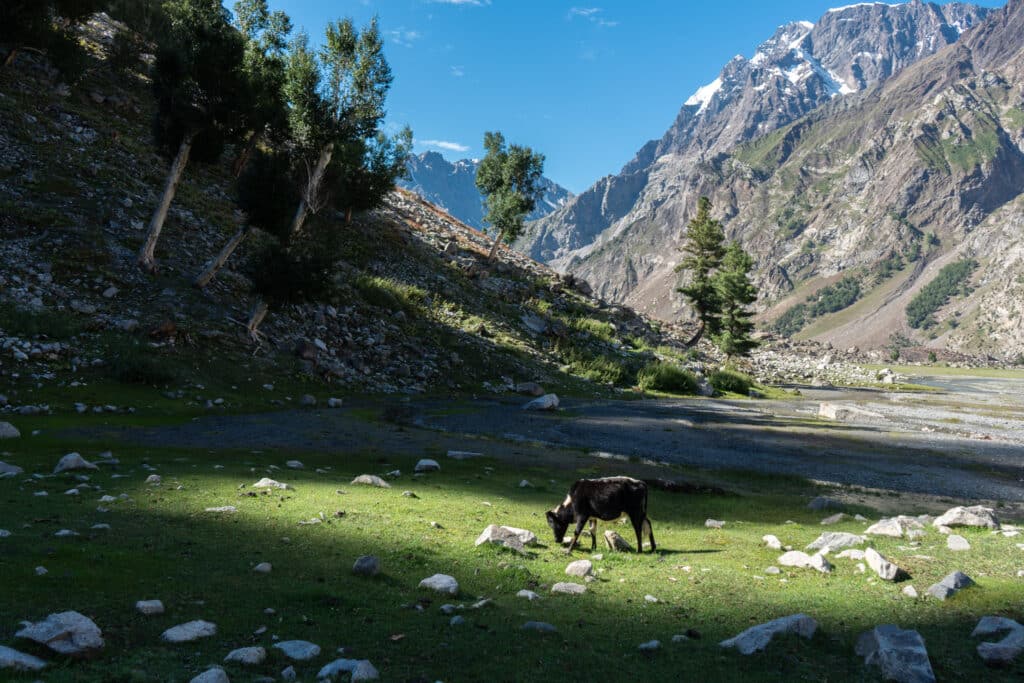
The route is mostly on Open Street Maps, with one caveat: as of 2026, the route shows that you need to cross over a bridge to the west side of the river, then carry on for several kilometers before crossing back. Locals advised us that floods constantly affect these bridges; better to stay on the east side of the river, just in case the bridge further on had been washed out. The east side was slightly steeper, but not anything particularly challenging, and much more green compared to the washed out other side.
You’ll pass plenty of shepherd huts along the way, though I didn’t find any of them particularly friendly/hospitable. However, if you’re worried about ever being really in need of help, know that there are people around in this part of the route. You can also ask them about which water is clean to drink as there are many springs and streams all over the area. “Chashma” is spring in Urdu, and “pani” is water.
We took our time throughout the day, taking several hours for snack stops, photoshoots, etc. We ended up reaching the “lower Shani” area around sunset at 6:30PM. There, we camped near a lake and a small stream, and found firewood from the mountainside nearby. Perfect campsite, do recommend! Just watch out for curious cows; they’re hungry and not afraid to poke around in your tent.
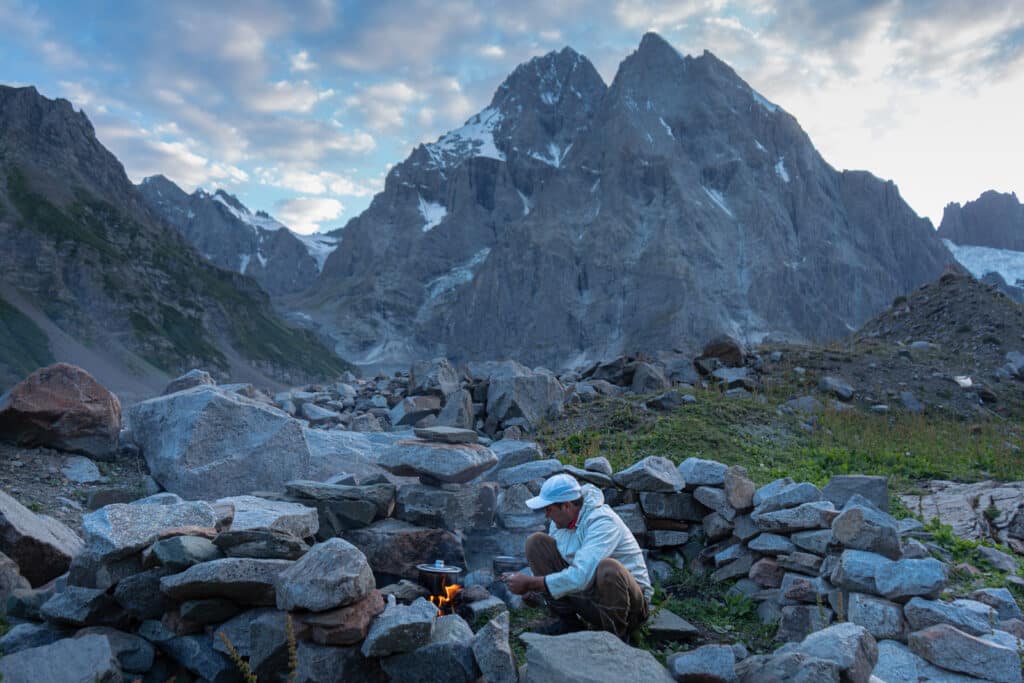
Cooking dinner at our campsite at the foot of Shani Peak.
Day 2: Over Pakora Pass (10-12 km)
This is the most strenuous day of the Pakora Pass trek from Naltar to Ishkoman Valley, as you have to cross over the pass and a glacier both.
There are two routes from the lower Shani area, one higher and one lower. When I went, the higher route was steeper, but very visible against the green mountain and intact. The lower route is flatter, but due to landslides has been washed out in several areas. We took the lower route, which was mostly fine but the landslide areas were slightly perilous. Step carefully.
Both routes eventually open into more high alpine meadows full of flowers, and there’s one more shepherd settlement in the area with plenty of yaks and horses. From there, the climb gets steeper, and you really feel like you’re working your way up the pass.
There’s one final grassy meadow with a stream before the landscape turns to barren rubble, right before the pass. If I did this trek again, I think I would camp in this meadow and leave the pass and glacier crossing for when I’m fresh the next morning, then spend one more night camping on the Pakora side. The only issue with the final meadow is that there are no trees or bushes in the area, so you can only camp there if you have a gas stove system with you. We were campfire only, so no go for us.
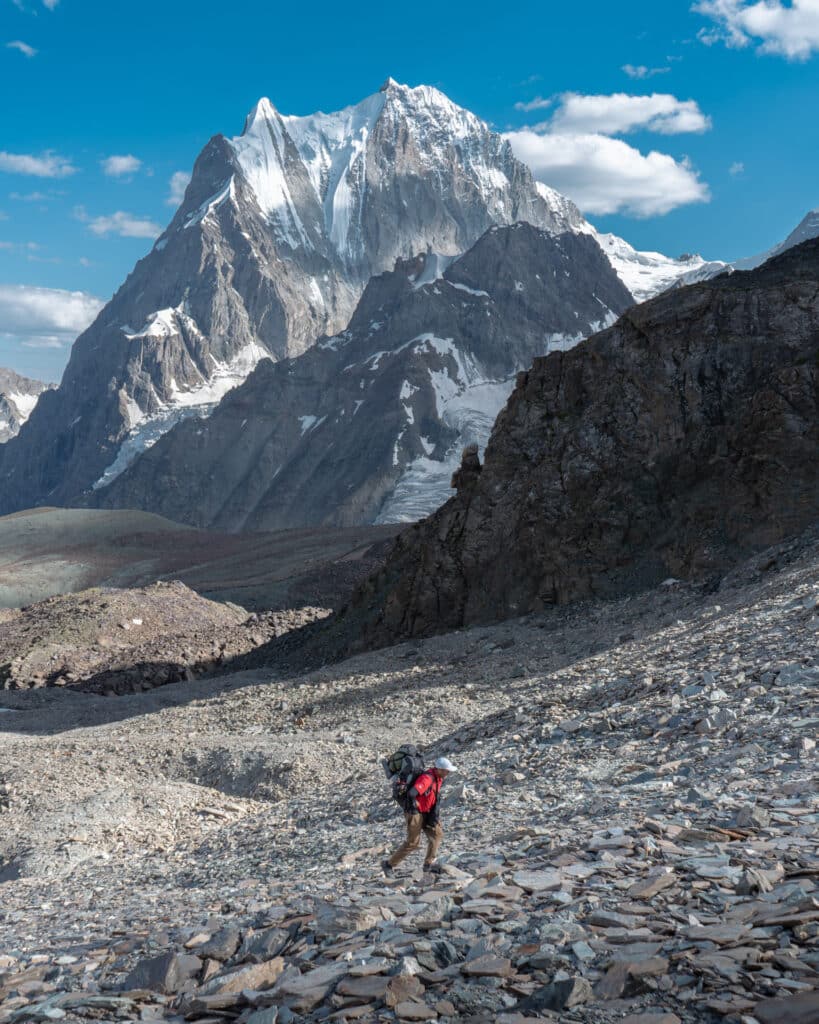
The pass itself is high but not too steep compared to other treks in the region; you can slowly but surely work your way up. There’s no particularly clear path, just keep heading up! At the top, you’ll be treated to several glacier views, two towering peaks (Shani Peak and one unnamed mountain), as well as a distant view of Rakaposhi if it’s clear.
After the pass, the path goes off to the right side of the glacier. We ended up slithering down over the glacier, but I wouldn’t do it again as the glacier was very soft and there was a lot of water at the bottom of it.
The mandatory glacier crossing goes across a second glacier that’s much firmer than the first. It’s not a particularly dangerous glacier as there aren’t many crevasses, but we did have to do a couple of scary hops while crossing. We were in a rush, though, as the sun was setting—I’m sure you could find a less perilous way around. Remember that glaciers are constantly changing; the route to get across will be different every year.
Safety note: If you don’t have experience on glaciers, I highly recommend hiring a local guide to come with you for safety reasons.
We ended up camping a little bit down from the glacier crossing, on the side of some red stones. It was just a functional campsite since the sun had set—rather than copying us, I recommend continuing at least 5km further down the ridge of the glacier, where you’ll eventually find very fresh spring water as well as grassy meadows and the start of forests.
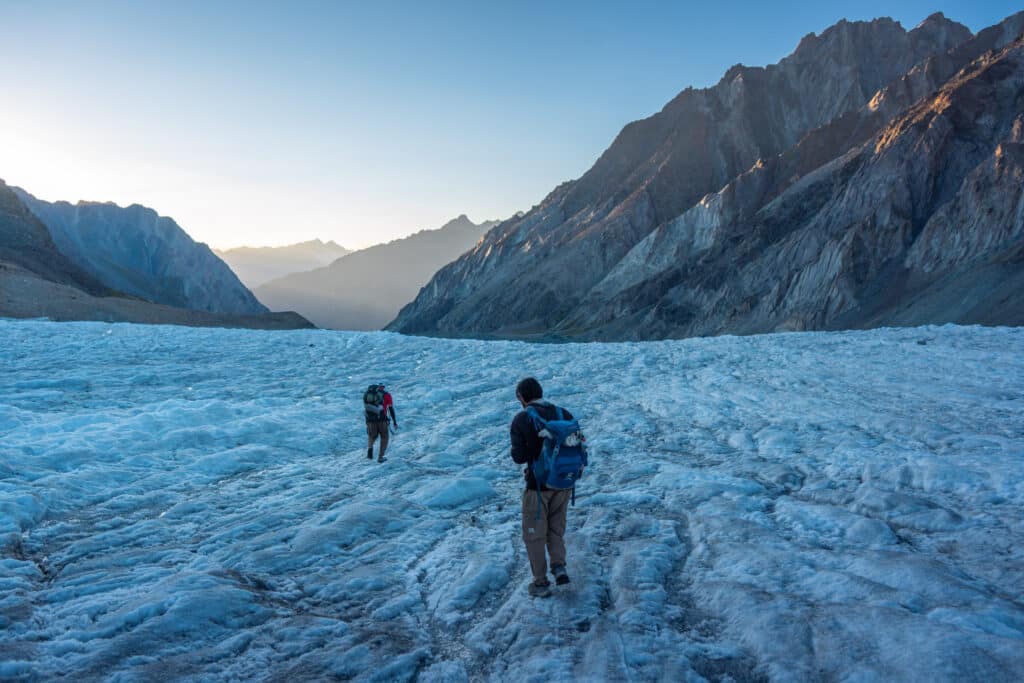
Day 3: Down through Pakora Nala (17-22km depending on camp)
Your final day is almost entirely downhill—and steep downhill at that!
Pakora Nala is a remote treat: dense juniper forests interspersed with green meadows. There was hardly a soul in sight for most of the way; cows were our only company.
The initial path weaves up and down through the meadows alongside the river. There were a couple points where it wasn’t clear that we needed to go down the mountain, especially before the first shepherd huts marked on OSM; pay attention to the map.
Again, floods have changed the route marked on the map. After the first shepherds huts on the map (Jut/Us Shepherd Huts), we worked our way down to the nearby bridge, but then did not cross back to the other side of the river until the very end of the trek, right before Pakora. There were other bridges, but the shepherds told us to ignore them.
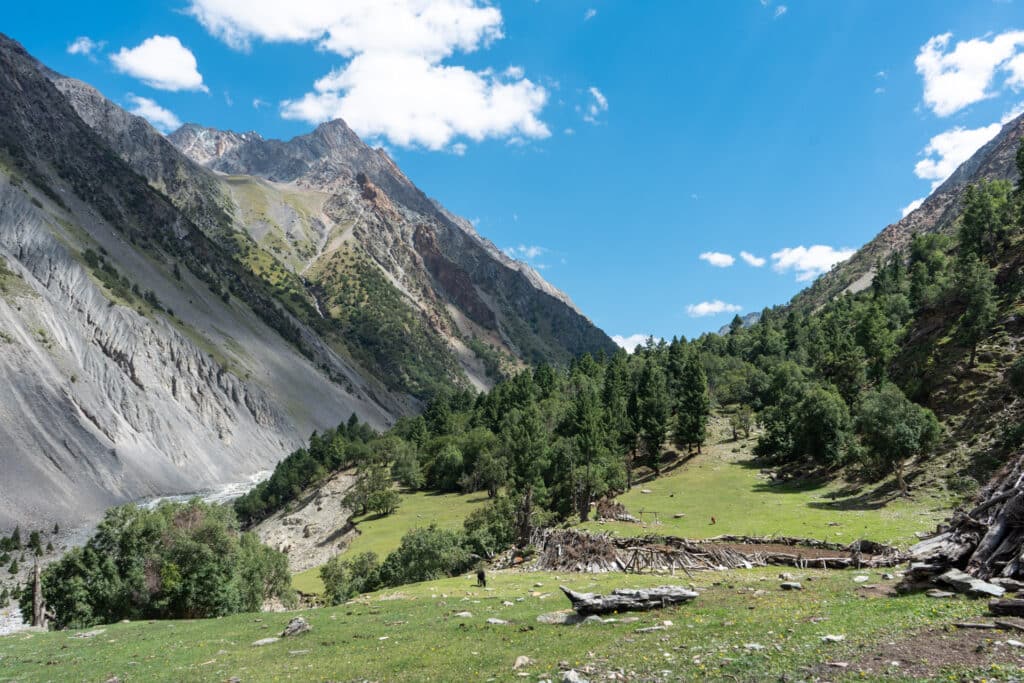
The path is extremely narrow at times, which is why the forests at the top of the valley are so dense: load-bearing donkeys can’t fit on the paths! However, about halfway down through the valley, the path starts to widen again. Don’t worry, it’s still adventurous: much of your final walk is along steep narrow paths with a long drop down to the river.
We reached Pakora Village around sunset. Unlike in Naltar, in Pakora we were warmly welcomed by locals. Within a few minutes of reaching the village, we were given fresh peaches and had several invitations to tea. Welcome to one of the most friendly valleys in all of Gilgit-Baltistan!
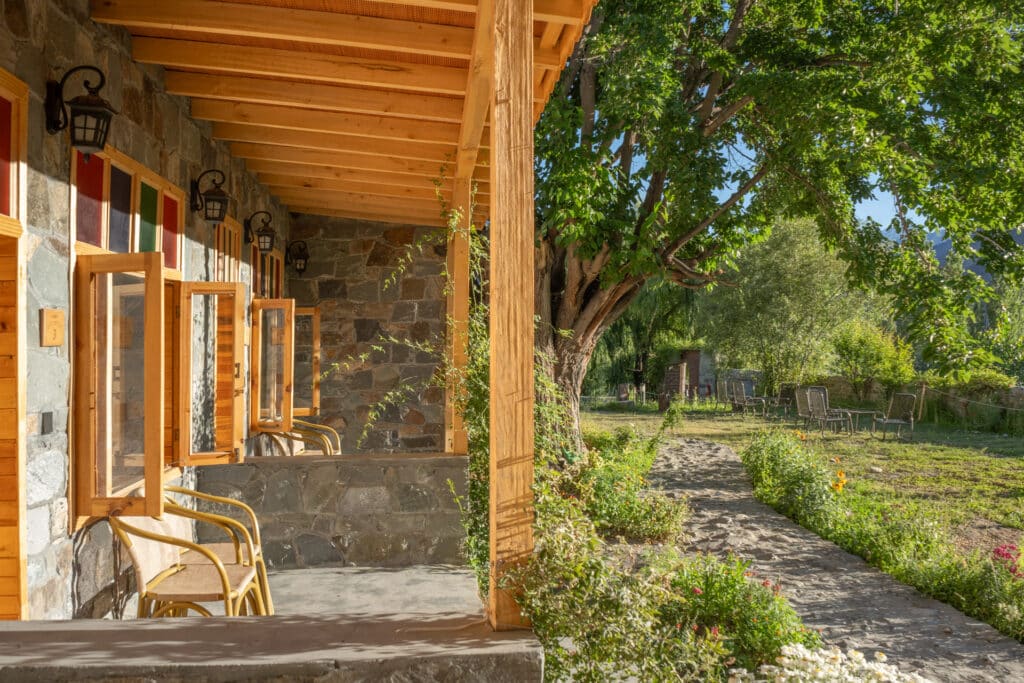
The best place to stay in Ishkoman Valley, located in Chatorkhand, close to Pakora
Best Place to Stay in Ishkoman Valley
Once you’re finished with your trek, the best place to stay in Ishkoman Valley is in Coyote Den Ishkoman, in nearby Chatorkhand village. It’s a 20-minute drive from where the trek ends, and there are plenty of cars going along the main road that can give you a lift.
At Coyote Den, you’ll find piping hot showers, clean food, and comfortable beds; everything you need after a trek in the mountains. Come clean up after your adventure, then relax in a hammock in the garden to give your weary legs a break. Your knees will need it after all that downhill!
If you want to make a reservation at Coyote Den before starting your trek, or just want to let us know that you’ll be trekking in our direction (always useful for safety reasons), feel free to call us or send us a WhatsApp message at +923554817770.
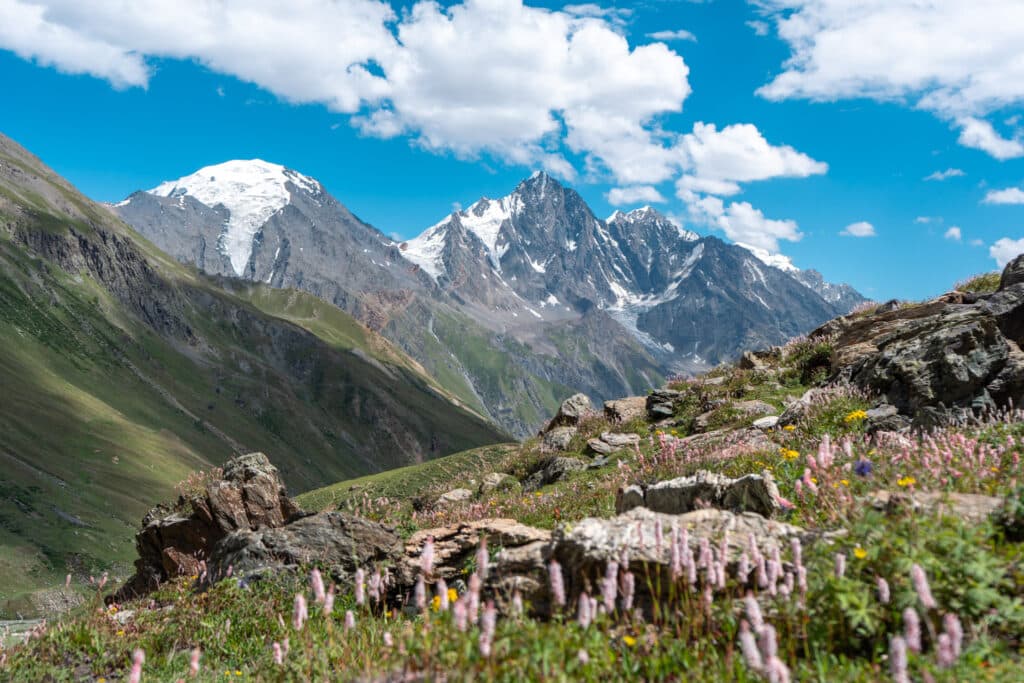
Wildflowers for days on the Pakora Pass from Naltar to Ishkoman Valley
The Most Beautiful Trek in Pakistan?
Ask any experienced trekker in Gilgit-Baltistan about the Pakora Pass trek from Naltar to Ishkoman Valley, and you’re sure to see a smile on their face. Though it’s not the longest, most rigorous, or highest trek in the area, many people think fondly of it because it’s so perfectly pleasant. Green meadows, countless wildflowers, and a stunning—and not too steep—pass. It has everything you might want in a trek, and is easily doable in 3-4 days. What’s not to love?
Come on over and see for yourself.
More on Travel in Pakistan
Want to try the Pakora Pass trek from Naltar to Ishkoman Valley, but don’t want to do it yourself? Check out my Pakistan tours, or contact me for a customized tour! Otherwise, these other articles might be helpful for planning your trip to Pakistan: