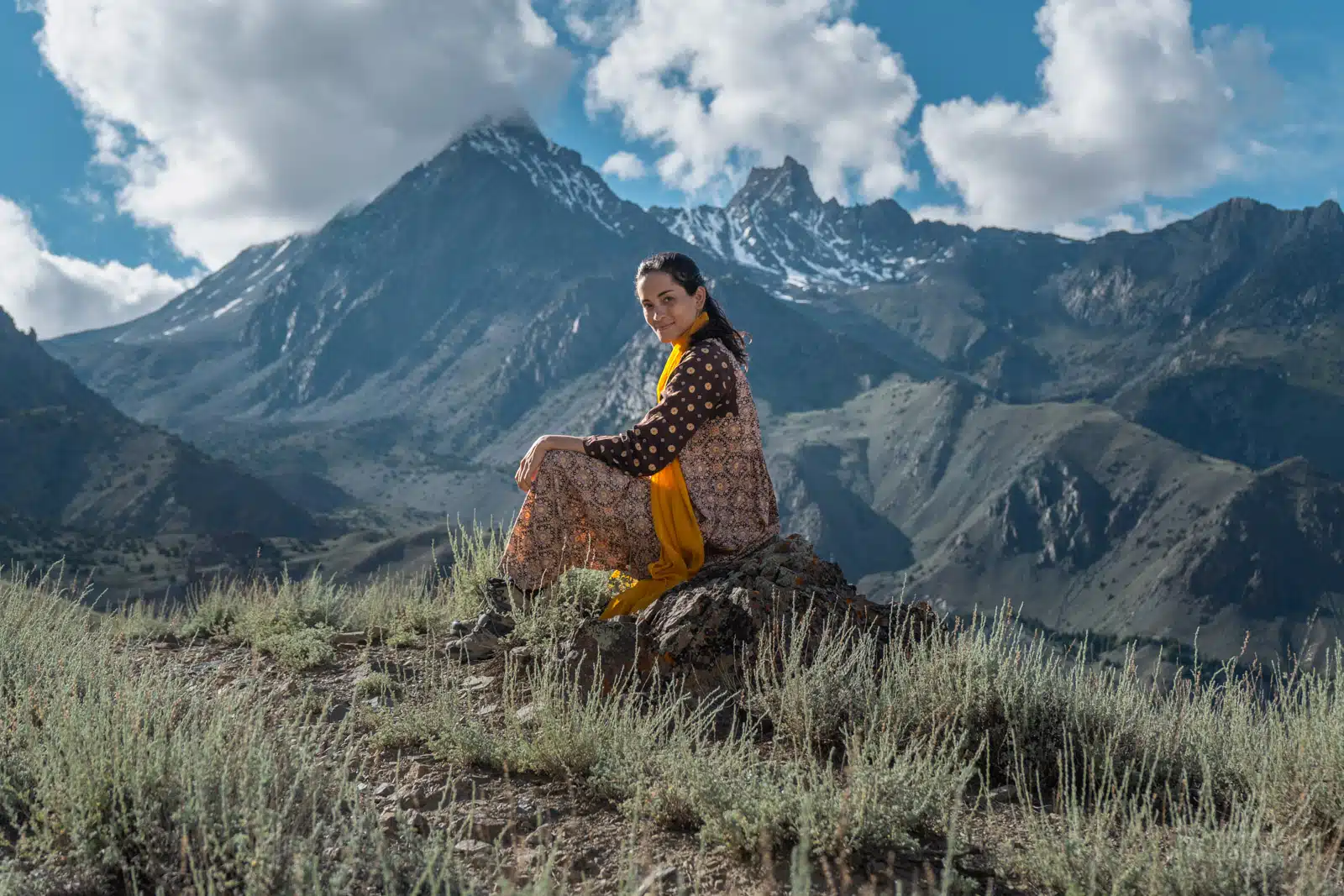
An unexpectedly tough challenge of living in Pakistan’s mountains, and what I’m trying to do about it.
When I started construction on my mountain hostel (and now hotel) in Pakistan, I knew it was going to be tough. Building tourist accommodation in an unknown valley of a less-touristed country among some of the highest, high risk mountains in the world. What could possibly go wrong?
Loads, of course. Construction chaos, destructive landslides, financial destitution, thieving neighbors, and the ongoing challenge of earning and maintaining the community’s respect.
Building a hostel ain’t easy.
But there was—is—one thing I didn’t expect to struggle with so much:
Isolation.
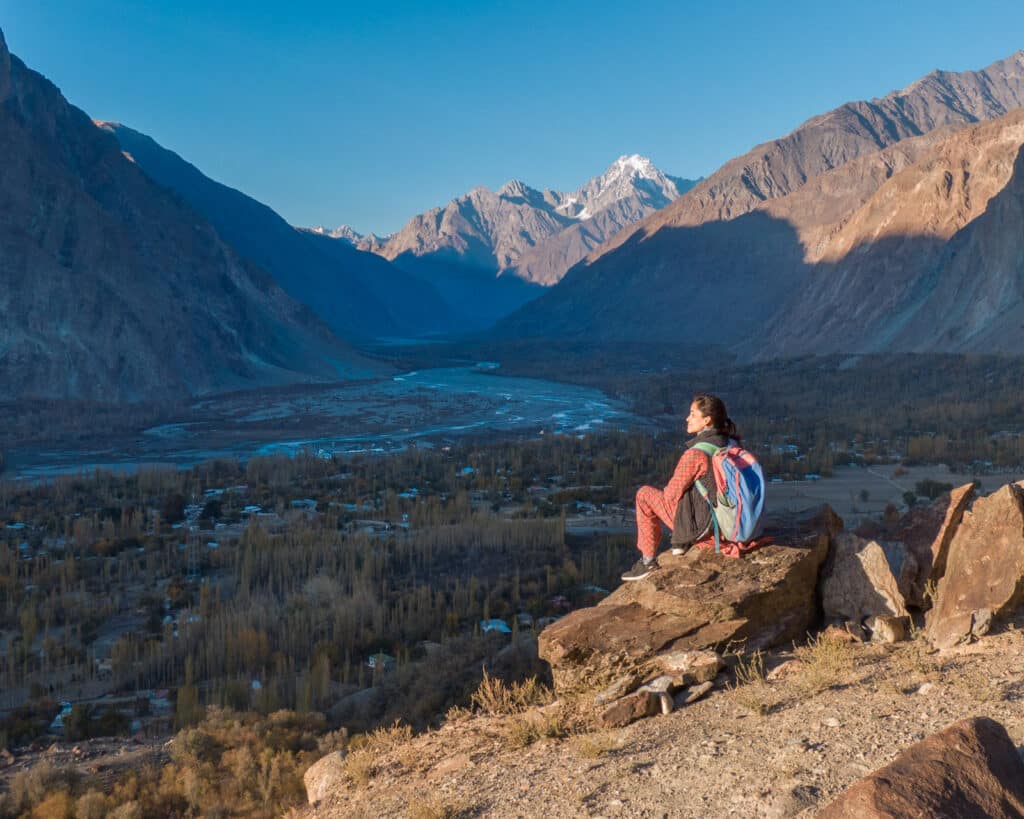
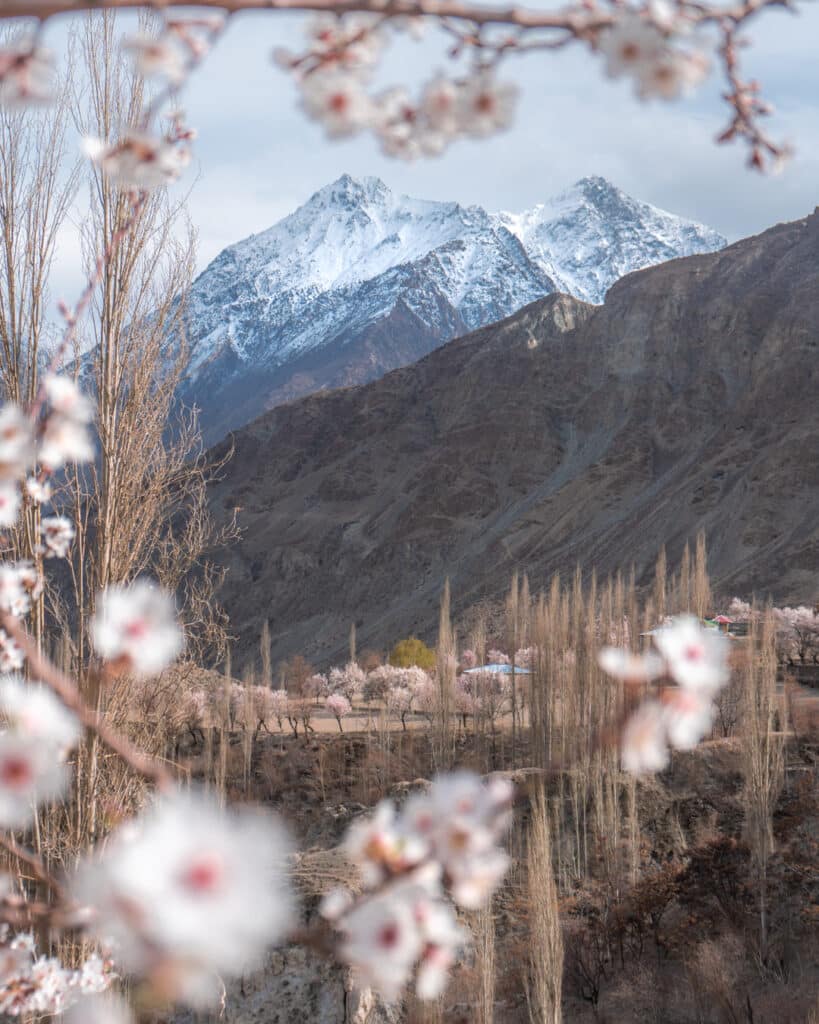
Looking over my new home in Chatorkhand village, Ishkoman
Unexpected struggles in the mountains
Before this whole adventure started, I had no idea how lonely and isolating living in Pakistan’s mountains would be.
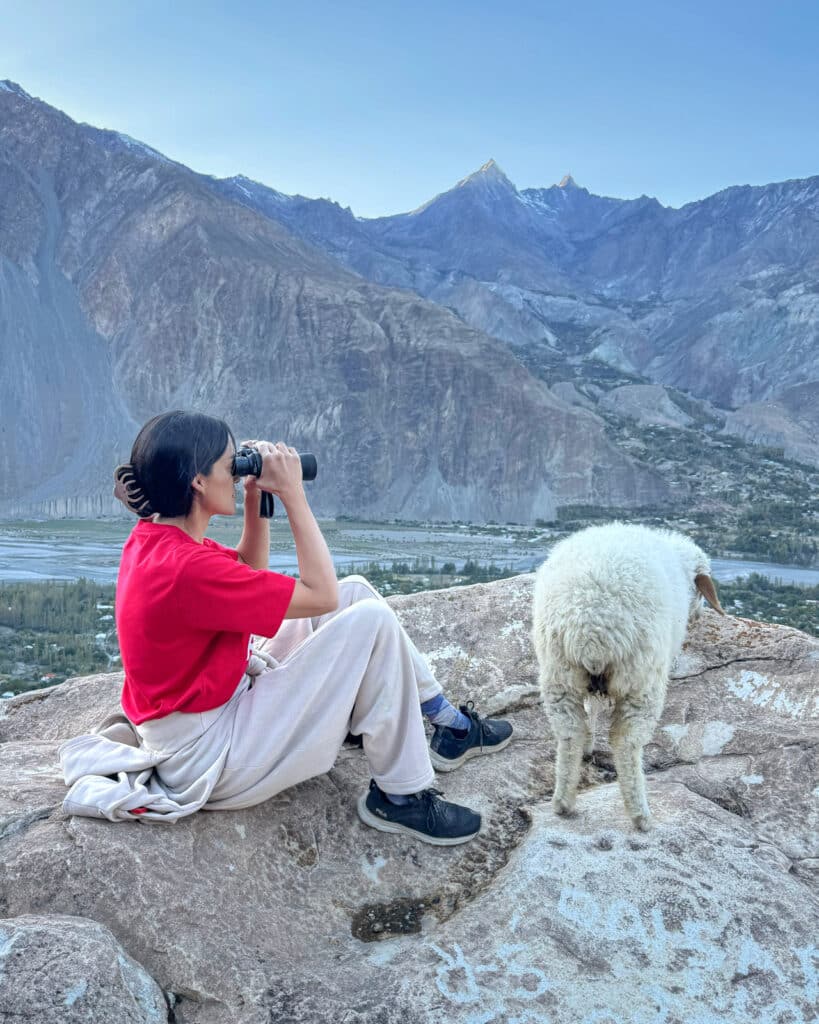
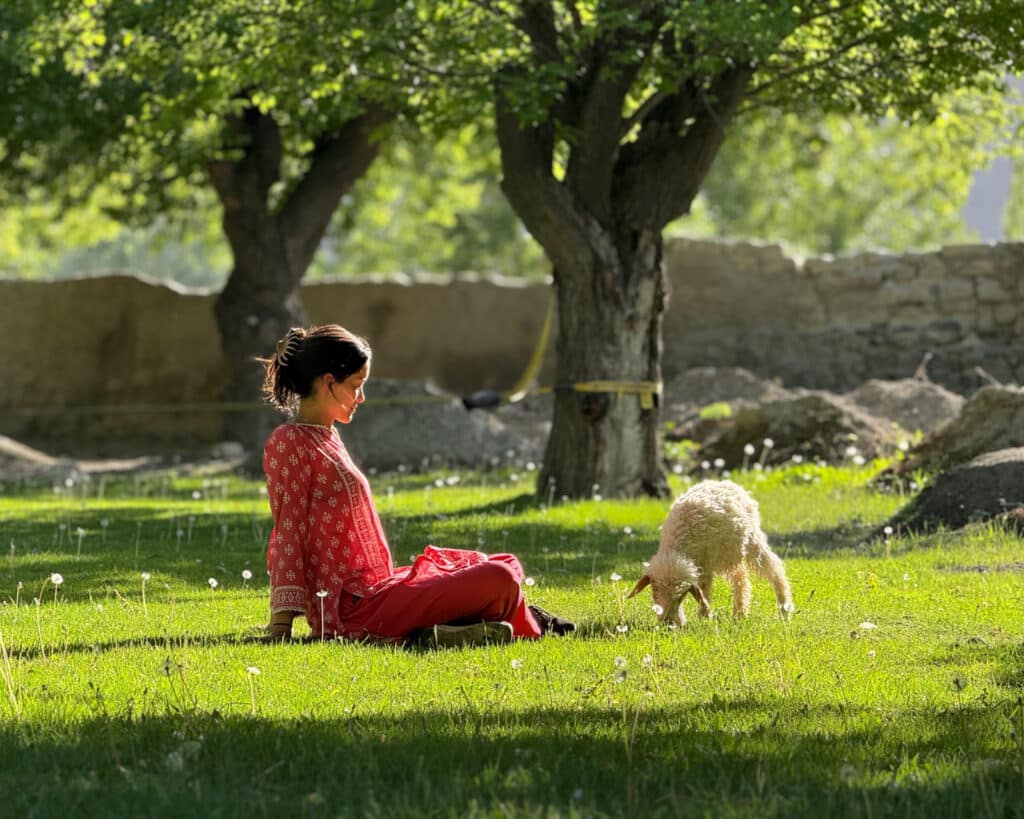
I don’t mean physically isolating. As a nature-loving introvert, I thrive on my own. Being out in the mountains with nothing but trees and sheep for company is my idea of a great time.
In the last two years, I’ve learned that living in the mountains of Pakistan can be socially isolating. For me, at least.
See, before shifting to the mountains, I was based in Pakistan’s capital, Islamabad. There, I’m surrounded by people who can casually debate politics over chai in English. Chitchat with foreign travelers is part of my daily routine when at my Islamabad hostel. In the city, I have a liberal friend group of women and men both to tap into to rant about life, love, and everything in between.
In the mountains I don’t.
In the mountains, I’m a weird progressive American/British/something woman who’s too old to be married and isn’t blonde enough to be an “real” foreigner. I ride motorcycles like a boy, walk with my sheep like a lowly shepherd, don’t speak the language well enough to gossip with local women (or stand up for myself when things aren’t going well), and make cultural mistakes on a daily basis.
Here, I’m one of a kind… and that’s not always a good thing.
Lost in translation, not With Purpose
After an admittedly large number of days wallowing in misery and self-pity, I’ve realized the language barrier is one of the roots of my problem. One I can actually tackle.
Thing is, as much as I love languages, mastering them is no easy task. Especially in the mountains of Pakistan.
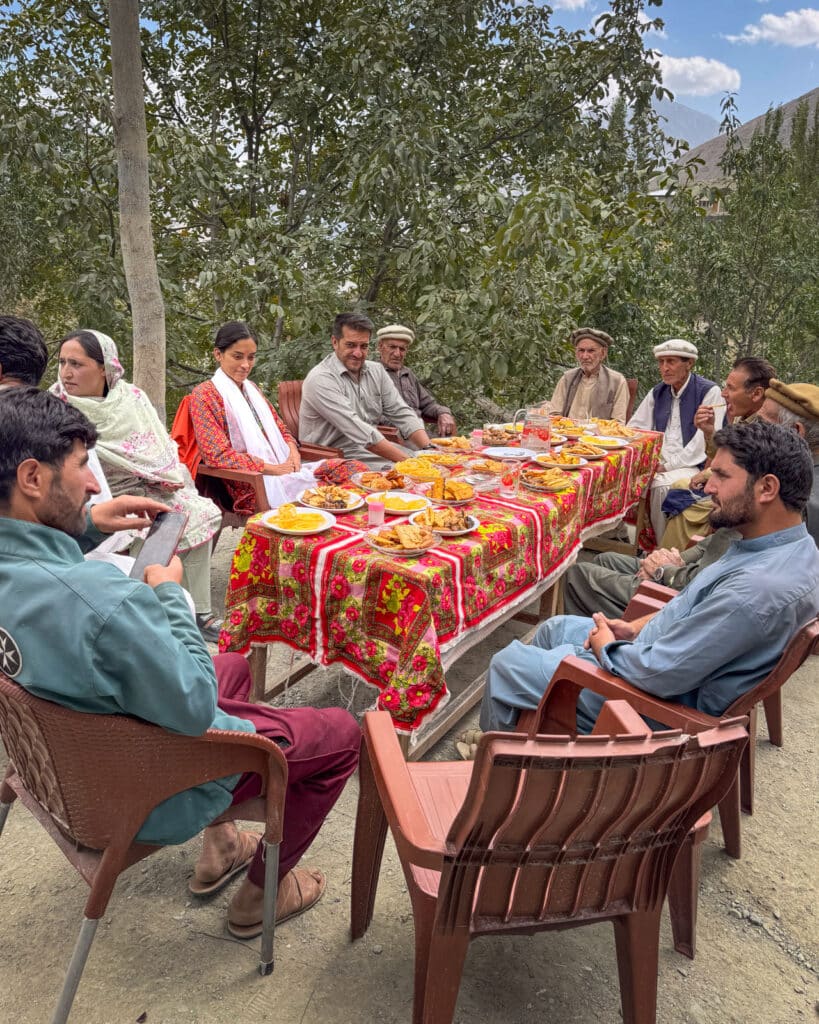
Here in Ishkoman Valley where I’m based, there are more than 10 languages spoken despite a population of only 30,000. My staff speak Khowar, shopkeepers speak Shina, my business partner speaks Pashto, and I struggle to keep up with conversation in Urdu, Pakistan’s national tongue. Unless a foreign guest appears, English is rare. I’ve done some Urdu lessons in the past, but there’s a big fluency difference between asking someone’s name and discussing land agreements.
This isn’t my first time living in a place where I don’t know the local language… but it is the first time I’ve lived in a foreign language while under pressure from a culturally sensitive, high stress job.
It doesn’t help that, as both outsider and owner of one of the area’s most high-profile businesses, I’m closely watched by an entire community for any kind of cultural faux pas. Correctly conjugating verbs is a lot harder when you’re simultaneously worrying about…
The length of your trousers.
If you should or should not interact with a male official.
Whether your scarf is modest enough.
If your Urdu-language documentation is correct.
If you should kiss or shake someone’s hand.
If someone is cheating you.
Whether you remembered the 3702184th foreign name of the day correctly as the person in question stares at you, waiting for a response.
When you’re trying to survive from both a business and personal perspective, making friends in a foreign language is a later problem. The thing is, that problem for later is the key to happiness in the present.
Dealing with those later problems
Let me clarify one thing: I’m not saying everyone needs to speak English. It’s not their language; why should they? Thanks to colonialism pillaging these lands, I’m already privileged to be a native speaker of the international linguistic go-to. Learning the local language(s) is my responsibility as the outsider and no one else’s.
Still, in reality, learning a language takes a lot of time and even more effort.
I’m trying, to varying levels of success. I’ve taken Urdu lessons in the past. I speak stilted Urdu on a daily basis. I’ve picked up a handful of Khowar words and phrases. I’m doing my best to learn from daily conversations… but I’m learning from locals who also don’t speak Urdu well. “Mountain Urdu,” city people often chuckle when they hear my strange speaking tainted by both American and pahadi accents.
Learning language through immersion is effective, but it isn’t everything. If you want to sound professional in another language, you do need to learn formally at some point or another. Language lessons are a must.
Problem was that last year there was too much going on for me to even consider starting lessons again. Even if I wanted to, the chance that I would have…
- Free time
- Internet
- Electricity
… all at the same time was virtually 0.
But this year, things are different. I’m writing this next to my solar battery setup. My staff have started to learn to manage hotel business themselves. Internet… well, that I’m still working on. But it’s good enough. Sometimes.
This year, I have a bit more breathing room to tackle those later problems… and this year, the stars aligned. A few months ago, at a time when I was again moping about how woefully insufficient my Urdu is for the life I want to live, Preply reached out to me.
What is Preply?
In case the name doesn’t ring a bell, Preply is an online learning platform connecting students with language teachers. They have teachers for over 90 languages in 180 countries. You can even specify the teacher’s native language, country of origin, etc. Very important when learning a language in a country with over 60 local languages in hundreds of dialects!
I signed my mother up for Preply lessons in the past—she was on her own mission to learn French—but I’d never used the platform for myself. Until now.
A couple months ago, Preply hooked me up with some lesson credits, and I began my hunt for a teacher. Preply had more than 600 Urdu teacher options, but I filtered by:
- Gender: I wanted a female teacher for cultural reasons.
- Teaching certifications: Explaining grammar is definitely not the same as knowing it.
- Native language: I wanted a native Urdu speaker, so I could learn a more standard accent (instead of hack mountain Urdu).
After sifting through dozens of profiles, I landed on Afreen, a teacher from Lahore.
Preply allows you to do half-priced introduction lessons, which is super helpful for deciding if a teacher is a good fit for you or not. If you and the teacher don’t vibe, learning becomes a chore rather than a fun challenge.
In my introduction lesson, I soon saw that Afreen is patient and very experienced. She was very gentle but vigilant in correcting my mistakes as I rambled to her about everything and anything in Urdu. Speaking to her felt natural and comfortable—a good fit indeed.
Preply from the middle of nowhere
I committed to weekly lessons with Afreen… with some trepidation.
All of our initial lessons took place from the comfort of my Islamabad hostel, where I was staying for some admin time/getting my life in order. Language lessons are all well and good when you’re connected to fiber internet… but I was due to return to the mountains, land of fleeting internet. Would the WiFi be good enough to keep up my language lessons?
It’s now been more than a month since I returned to the mountains. After a month being back and continuing my Urdu lessons, props are due to both Preply and Afreen.
Preply’s video streaming service works surprisingly well on my dubious internet (2 Mbps max, pity me). Sure, it has its laggy moments, but they’re few and far between. I’ve been able to continue video lessons with Afreen, interact with her on the app’s whiteboard tool, and review notes with her in separate documents all at the same time.
Afreen has also been wonderfully accommodating. I explained to her that my internet is woefully unpredictable and dependent on weather, wind, and the will of God. She laughed and launched into her own stories of struggling to run her own teaching business on fleeting signals. In this month I’ve been back, I missed a lesson or two because the internet was down, but she didn’t hold it against me at all.
In Pakistan’s mountains, few things come easy. But when the tools are good and people are patient, things do happen.
Slowly but surely
This isn’t to say I’ve magically become fluent in Urdu in the last month. I still misgender objects constantly, make up my own verbs (English verb + karna works too well in Urdu), and bungle all my tenses. The number of grammar mistakes I make is still directly correlated with how nervous I am speaking in front of scrutinizing men.
What matters is that I feel like I’m moving forward, rather than feeling stuck. Like the towering Karakoram Mountains where I now live, learning a language can seem like a massively insurmountable task. No one climbs a 7000m mountain in one day; no one becomes fluent in a language overnight. The only way to approach either challenge is to come with patience and persistence, and now I feel like I’m back on my track.
Socializing in the mountains is still a challenge, but I feel more confident attempting higher level conversation in Urdu because of my lessons. Work formalities are still frustrating, but I feel like I’m making progress as Afreen teaches me more advanced grammar and vocabulary.
These days, I do feel like I’m climbing up, slowly but surely (internet permitting). I may not reach the summit any time soon, but as long as I learn enough Urdu to make some friends on the way, I’m cool with that.
Struggling up your own language-learning mountain?
Why not give Preply a go?
Yay transparency! Preply sponsored my language lessons in exchange for this post, but I only agreed to it because it’s something I already align with and would use on my own. Only ethical advertising on my page.


Hi Alex – I’m relatively new to this blog; are you living in Pakistan full-time or going back and forth from the US? Either way, the hotel looks amazing!
Great read! Compliments on the clear presentation and engaging writing style regarding “The hardest part of living in Pakistan’s m…”.
Finding verified, top-tier creators shouldn’t feel cluttered. At Siren Spot, our mission is to deliver a seamless onlyfans search experience where audiences can discover standout content creators and influencers in an organized directory.
Kind regards,
David (Siren Spot)